
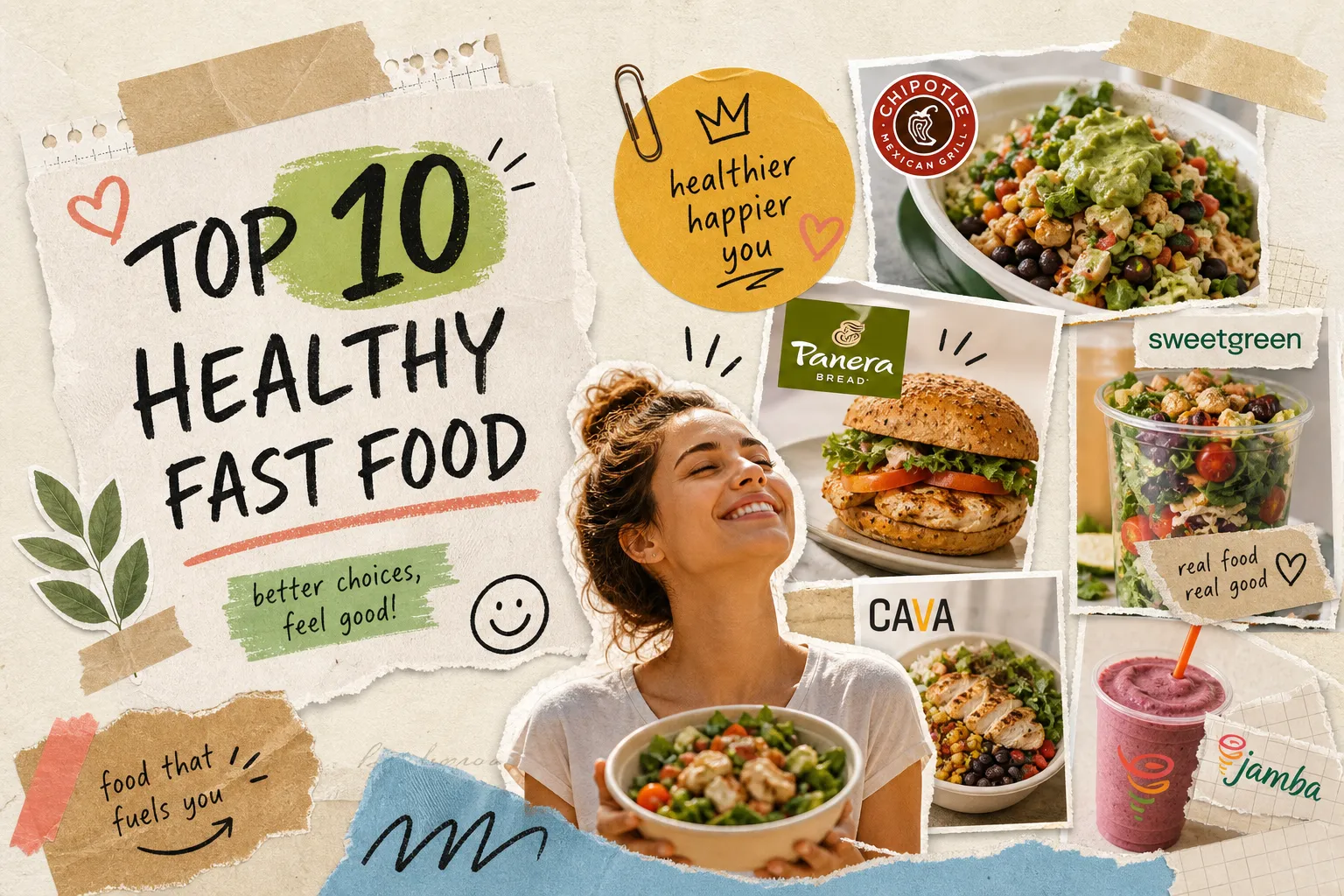
Fast food is part of daily life for most Americans, and if you’re going to eat it, you might as well know how to order smart. Whether it’s a lunch break with 20 minutes on the clock, a road trip with limited options, or a family dinner where everyone agrees on a drive-through, the question isn’t whether to show up at the counter. It’s whether you know what to order when you get there. That gap between showing up and ordering smart is exactly where most nutrition goals get derailed. This guide covers the top 10 healthiest fast food restaurants in the USA, ranked on transparency, variety, and real customization control, so you can close that gap before you walk in the door.
Before you head out, RestaurantMenuList.com compiles full, current menus and prices for every chain on this list, so you can plan your order from a calm, clear headspace instead of reading a backlit menu board while the line grows behind you.
What actually separates a healthy fast food chain from the rest
Not every chain that offers a salad deserves a spot on a list like this. The difference between a genuinely health-conscious chain and one that’s just marketing a lettuce-topped option comes down to three things: nutritional transparency, real menu variety for health-conscious diners, and customization flexibility that gives the diner actual control over what goes into their meal.
Nutritional transparency means the chain publishes calories, sodium, saturated fat, protein, and allergen data somewhere accessible before you walk in the door. Some chains do this through live online calculators that update in real time as you build your meal. Chipotle and Taco Bell are the clearest examples: both let you modify ingredient by ingredient and see the nutritional impact immediately. Others publish static PDFs, which are better than nothing but make it much harder to evaluate a custom order. Chains with live, itemized nutrition tools ranked higher on this list as an editorial factor in the scoring.
Customization flexibility matters just as much as transparency. A chain that lets you swap sauces, skip cheese, add vegetables, or switch proteins gives you genuine control over your calorie and sodium intake. One that locks you into preset combinations gives you very little. Price and U.S. location count were also factored into the ranking, because a healthy option that requires a 40-minute drive or a $20 bill isn’t practical for most people. That’s why low-calorie fast food chains like Subway, with 20,000+ U.S. locations and average meal prices starting around $7, rank alongside premium options. Usability matters.
Top 10 Healthiest Fast Food Restaurants in the USA, Chains 1 Through 5
1. Panera Bread
Panera earns the top spot based on nutritional transparency, menu variety, and the quality of its lighter options. The Turkey Sausage, Egg White & Spinach Breakfast Power Sandwich delivers 390 calories, 17g protein, and 630mg sodium, one of the most balanced complete breakfast items in mainstream fast food. Panera’s full nutrition guide, updated as of June 2026, is one of the most consumer-friendly in the industry. The “You Pick Two” combo format also gives you a strategic way to control portions by pairing a half-portion soup with a half-salad or half-sandwich.
2. Chipotle
Chipotle is a frequent top pick among registered dietitians for its ingredient transparency and build-your-own model. A chicken burrito bowl built with brown rice, black beans, fajita vegetables, fresh salsa, and lettuce runs roughly 600 to 680 calories with 40g or more of protein. If you want to cut carbs further, the salad bowl version drops calories noticeably while keeping protein high. Chipotle’s online nutrition calculator updates in real time as you add or remove ingredients, which makes it one of the most transparent customization tools in the industry.
3. Sweetgreen
Sweetgreen built its entire model around whole-food ingredients, and the menu reflects it. Salads and grain bowls typically land between 350 and 600 calories depending on dressing and protein choice, based on ranges published on the chain’s official nutrition page. The Shroomami bowl and seasonal grain bowls with grilled chicken, which typically deliver around 30g of protein at moderate sodium, are reliable picks for diners watching both numbers. The bowl-format ordering also makes calorie tracking straightforward because you can see exactly what’s going in before it gets assembled.
4. CAVA
CAVA’s Mediterranean fast-casual model earns serious nutrition credibility. A bowl built on a greens base with roasted vegetables, grilled chicken, and tzatziki delivers strong fiber and protein at a reasonable calorie count. The greens-and-grains base is the smarter starting point over pita chips if you’re watching carbs. CAVA publishes ingredient transparency and allergen listings clearly on its site, and the build-your-own format gives you the same granular control as Chipotle, just with a different cuisine profile.
5. Subway
No chain on this list is more accessible. With 20,000+ U.S. locations and meal prices starting around $7 to $9, Subway reaches diners that other entries on this ranking simply don’t. According to Subway’s published nutrition data, a 6-inch Oven Roasted Turkey on whole wheat with standard vegetable toppings comes in around 280 to 320 calories, making it one of the lowest-calorie complete meals in fast food. The key is ordering without calorie-dense sauces and loading up on the free vegetable toppings, which most people underutilize.
Top 10 Healthiest Fast Food Restaurants in the USA, Chains 6 Through 10
6. Chick-fil-A
Chick-fil-A maintains a dedicated nutrition and allergen page built on standard-recipe data, which makes pre-visit planning easy. The Grilled Chicken Sandwich at 320 calories and 29g protein is one of the best calorie-to-protein ratios on any fast food menu in the country. The Grilled Nuggets (8-count) at 140 calories and 25g protein are even more efficient. Per Chick-fil-A’s own nutrition data, choosing grilled over breaded chicken can save approximately 150 to 200 calories per order, a consistent pattern across sandwich and nugget comparisons. The Kale Crunch Side is a genuinely good fiber add-on.
7. Taco Bell
Taco Bell surprises people who write it off as junk food. The chain’s granular customization options allow for orders well under 400 calories when used deliberately. Ordering “fresco style” replaces cheese and creamy sauces with fresh pico de gallo, cutting both calories and sodium in one move. The Black Bean Burrito Fresco Style, the Power Menu Bowl with customizations, and the Cantina Chicken Taco are all legitimate low-calorie picks, verify current calorie counts on Taco Bell’s nutrition calculator, as values can shift with recipe updates. Taco Bell also posts full nutrition data with item-level detail online, which earns it a place alongside Chipotle as one of the two most transparent low-sodium fast food chains on this list.
8. Panda Express
Panda Express scores on portion control and stir-fry cooking methods, both of which keep calorie counts lower than deep-fried alternatives. The Grilled Teriyaki Chicken with Mixed Vegetables and steamed rice sits around 430 to 500 calories for a standard plate. The “Wok Smart” selections are the cleanest picks on the menu. One caution: sodium climbs fast with sauces at Panda, so choosing grilled proteins and lighter sauce applications makes a measurable difference for anyone following low-sodium fast food chain strategies.
9. Jersey Mike’s
Jersey Mike’s runs $12 to $14 per meal, making it the priciest sandwich option on this list, but it earns its spot through deli-quality ingredients and clear nutritional transparency. The Turkey and Provolone sub on whole wheat delivers solid protein, check Jersey Mike’s official nutrition sheet for the current gram count on the regular or “sub in a tub” variant, as portion sizes affect the total. That “sub in a tub” option, where your sandwich becomes a lettuce bowl instead of a bread-based sub, is available at most locations and cuts carbs significantly without sacrificing any of the flavor or protein from the fillings.
10. Shake Shack
Shake Shack’s footprint is limited at 350+ U.S. locations, but its transparent nutritional data and meaningful customization options earn it a place here. The lettuce-wrap burger, available on request, significantly reduces carbs and total calories compared to a standard bun. The grilled chicken option cuts saturated fat compared to the beef patty. If there’s a Shake Shack near you, it’s worth knowing how to order from it.
The best specific low-calorie and high-protein menu picks
Knowing which chains made the list is useful. Knowing exactly what to order is more useful. These picks cover the full spectrum from minimal-calorie to high-protein, with numbers attached.
Under 400 calories: Subway 6-inch Turkey on whole wheat (approximately 300 calories per Subway’s nutrition data), Chick-fil-A Grilled Nuggets 8-count (140 calories, 25g protein), Panera Turkey Sausage Egg White & Spinach Power Sandwich (390 calories, 17g protein), and the Taco Bell Black Bean Burrito Fresco Style (verify current calories on Taco Bell’s nutrition calculator). For more on Panera’s lighter options, see a roundup of the healthiest items at Panera. All four are high in fiber and protein, which is exactly why they actually satisfy despite the low counts.
For 30g or more of protein: A Chipotle Chicken Salad Bowl runs approximately 45g protein. A CAVA bowl with grilled chicken and hummus delivers strong protein alongside Mediterranean fats. The Chick-fil-A Grilled Chicken Sandwich at 29g protein is one of the most efficient single-item protein sources in fast food. Jersey Mike’s Turkey sub is another solid option for hitting a meaningful protein target, confirm the exact gram count on their nutrition sheet for the size you order. The metric worth chasing isn’t just raw calories; it’s protein per calorie, because that ratio determines whether you’re satisfied an hour later or back at the counter.
Vegetarian and vegan picks: The Chipotle Sofritas Bowl, CAVA Falafel Bowl, Panera Ten Vegetable Soup paired with a salad, and Taco Bell’s Bean Burrito Fresco Style all deliver real nutrition without meat. Black beans contribute approximately 14g protein per cup (per USDA nutrient data); falafel varies between 8 and 12g depending on portion. One thing to watch: sodium tends to creep up in vegetarian options even at otherwise clean chains, because sauces and seasonings often compensate for the absence of meat-based flavor. For guidance on plant-based eating and weight-loss-friendly vegetarian plans, resources on vegetarian weight loss can be helpful. Check the numbers before you assume a vegetarian order is automatically lower in sodium.
Smart ordering swaps that cut calories and sodium without sacrificing your meal
A few consistent swaps apply across all 10 chains and make a real difference. Skip creamy dressings and ask for them on the side, depending on portioning, that single move can save a meaningful amount of calories, since full dressing portions at many chains run 150 to 250 calories on their own. Choose grilled over breaded protein: at Chick-fil-A, for example, the grilled sandwich saves roughly 150 to 200 calories compared to the classic breaded version, a pattern that holds at most chains. Replace soda with water or unsweetened iced tea: a standard 20-ounce fountain drink at major chains typically adds 40 to 60 grams of sugar to an otherwise solid meal, and the broader health risks associated with fast-food consumption and sugary beverages are well documented. These aren’t restrictions. They’re redirects to better menu items that already exist with no special requests required.
The chain-specific moves are worth memorizing: “fresco style” at Taco Bell, “greens base” at CAVA, lettuce wrap at Shake Shack, “sub in a tub” at Jersey Mike’s, and a half-portion grain bowl at Sweetgreen. These aren’t secret menu hacks, every counter employee knows them. The difference between ordering one of these and a standard combo can be 200 calories or more at the same chain, at the same price point, with the same level of satisfaction afterward.
Browse full menus and prices before you pick your spot
Hunger and decision fatigue reliably push people toward whatever looks most immediately satisfying at the counter, rarely the 320-calorie grilled option. Doing your menu research in advance, when you’re calm and not staring at a backlit overhead board, puts the decision in a completely different headspace.
RestaurantMenuList.com makes that research fast and frictionless. Instead of navigating eight different chain websites, downloading PDFs, or guessing at prices, you can browse full, current menus and restaurant profiles for every chain on this list in one place. Whether you’re comparing Chipotle and CAVA for a weekday lunch, checking current Panera prices before a weekend breakfast stop (see Fast Food Prices in 2026), or scanning Taco Bell’s fresco options during a road trip, the platform puts the information exactly where you need it, before you need it.
Eating smarter at fast food restaurants doesn’t require ordering sad salads with underpowered dressings. It means knowing which chains publish real nutrition data, which menu items deliver solid protein at reasonable calorie counts, and which ordering moves cut sodium and calories without making your meal feel like a compromise. Every chain on this list makes a smart order achievable. Choose your next meal from the top 10 healthiest fast food restaurants in the USA and plan it at RestaurantMenuList.com, pick your item in advance and order it with confidence when you get there. The information exists; now you know where to find it.
For full site policies, see our Disclaimer, Restaurant Menu List Review.

Hi! I’m Maherin Akter, and welcome to RestaurantMenuList.com. For the last three years, I’ve been on a mission to explore every flavor I can find sharing everything from my favorite recipes and honest restaurant reviews to deep dives into menu details.