
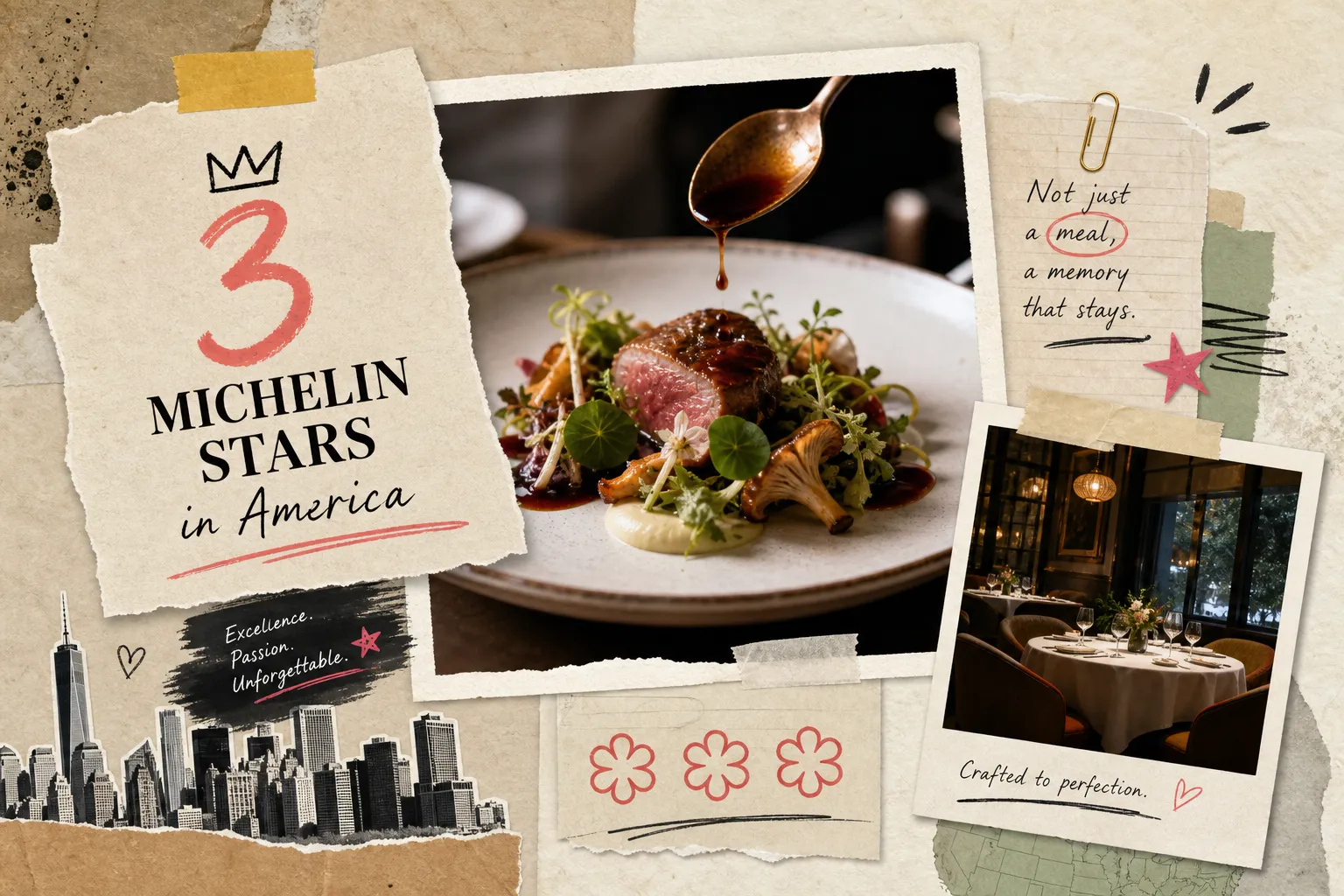
Fewer than 15 restaurants in the entire United States currently hold three Michelin stars, and this guide covers every one of them. That number sounds small until you consider what it actually means: the Michelin Guide, the most respected fine dining authority in the world, reviews thousands of restaurants and awards this distinction to a bare handful each year in America. If you’re researching 3 Michelin star restaurants in America for 2026, you’re looking at a list of 14 establishments that represent the absolute ceiling of the craft, combining technical mastery, ingredient sourcing pushed to obsessive extremes, and service choreography that most diners have never encountered. This guide covers what each one costs, how to dress, and exactly how to secure a table. Before you start calling in favors, pull up RestaurantMenuList.com first: it consolidates current tasting menu structures and price ranges for these restaurants so you can compare options before committing to a reservation.
The 2026 list has shifted noticeably from recent years. Alinea, Masa, and The Inn at Little Washington were all downgraded to two stars, which reshuffles both the geography and the broader narrative around American three-star dining considerably. What remains is a leaner, tighter group of restaurants that represent the craft at its highest.
3 Michelin Star Restaurants in America: The Complete 2026 List
The Michelin Guide USA is the authoritative source for current star status, updated annually. As of 2026, 14 restaurants in the United States hold three stars. The list clusters heavily on the coasts, with New York and California dominating, and a single entry holding the flag for the Midwest. For a consolidated index on our site, see USA, Restaurant Menu List Review.
New York: still the country’s three-star capital
New York holds six of the fourteen spots, more than any other city in the country. The current three-star restaurants are Chef’s Table at Brooklyn Fare, Eleven Madison Park, Jungsik New York, Le Bernardin, Per Se, and Sushi Sho. Masa’s demotion to two stars removed one of the city’s most iconic names from this tier, but the six that remain represent a true cross-section of culinary philosophy. Le Bernardin anchors French seafood technique. Eleven Madison Park leads the plant-based fine dining conversation. Jungsik brings Korean fine dining to this level. That breadth of culinary philosophy concentrated in one city is rare anywhere in the world.
California’s rising concentration of elite tables
California carries eight three-star restaurants, spread across four distinct destinations: San Francisco, Los Angeles, San Diego, and Healdsburg. The list includes Atelier Crenn, Benu, and Quince in San Francisco; The French Laundry in Yountville; SingleThread in Healdsburg; Addison in San Diego; and Providence and Somni in Los Angeles. The Bay Area alone holds four of these restaurants, making it worth building an entire trip around. For serious food travelers, a San Francisco itinerary that staggers dinners at Benu, Atelier Crenn, and Quince across several nights is a remarkably realistic way to experience three-star dining at volume.
Chicago’s lone three-star entry
Smyth holds Chicago’s only three-star rating after Alinea’s demotion. That drop shifts how the broader food world perceives Chicago’s position in American fine dining, but Smyth’s standing is its own argument. The restaurant operates with a seasonal, intensely local sensibility that feels distinct from its coastal counterparts. The Midwest may have fewer entries at this level, but Smyth earns its place on any national shortlist without question.
What a Tasting Menu Looks Like at These Restaurants
Every three-star restaurant in America serves a tasting menu. There is no à la carte option. If you’re booking for the first time, understanding this format before you arrive changes the entire experience. A tasting menu is a chef-curated, multi-course progression where the kitchen controls the full arc of the meal. You’re not ordering; you’re being guided through a sequence the chef has designed to tell a story, build contrast, and demonstrate range. First-timers who arrive expecting to choose their dishes often leave surprised by what they actually signed up for.
Course count, pacing, and how long dinner actually takes
Most three-star tasting menus in the U.S. run between 8 and 20 courses, though how a kitchen defines a “course” varies significantly. Many restaurants open with an amuse-bouche sequence that feels like six or seven small bites before the official menu even begins. Total dining time typically runs between 2.5 and 4 hours. That pacing is intentional: the kitchen uses the rhythm of the meal to build tension, provide relief, and land a final impression. Arriving hungry and unrushed isn’t just a suggestion, it’s a prerequisite.
Signature dishes worth knowing before you sit down
Benu’s tasting menu is built around Corey Lee’s Korean-American culinary identity, with iconic preparations like the thousand-year-old quail egg and a faux xiao long bao that plays with expectation and technique in the same bite. Atelier Crenn presents its menu as an edible poem, with Dominique Crenn’s seafood- and vegetable-forward vision structured as a series of small, artfully conceived bites rather than traditional courses. SingleThread anchors its progression entirely to the Sonoma farm season, so the menu shifts with what’s growing rather than a fixed concept. Le Bernardin’s identity is rooted in French seafood technique at the highest level, with preparations that showcase the ingredient rather than the chef’s ego. For more on top seafood-focused tasting rooms, see Best Seafood Dining in America: A Complete Guide, Restaurant Menu List Review. For context on how tasting menus have been changing recently, consider this industry piece on evolving formats: The Tasting Menu Gets a Trim.
The Real Price of a Three-Star Dinner in 2026
Three-star dining is expensive, but the price range across these 14 restaurants is wider than most people assume. Tasting menus generally run from approximately $250 to $450 per person before wine. Wine pairings typically add $85 to $350 per person, depending on whether you choose a discovery-level or reserve pairing. At the higher end of the spectrum, an all-in dinner for two at restaurants like Per Se or Chef’s Table at Brooklyn Fare regularly reaches $800 to $1,200 once wine, tax, and service are included. Before booking, check current menu pricing at RestaurantMenuList.com for the specific restaurant you’re considering, prices update seasonally, and what you read in a year-old review may no longer reflect current reality.
Hidden costs that catch first-timers off guard
Many three-star restaurants now add a service charge of 20 to 22 percent automatically, replacing the traditional tipping model. That charge doesn’t appear in the base tasting menu price, so your $325 per person dinner becomes closer to $395 before beverages. Optional add-ons like cheese courses, supplemental dishes, and custom beverage pairings push totals higher still. Budget using the all-in figure rather than the headline menu price, and you won’t find yourself doing math at the table at the end of the night.
Dress Codes and Dining Culture at America’s Finest Tables
Three-star restaurants treat the full dining experience as a designed whole, and dress is part of that design. The conversation isn’t about pretension; it’s about preparation. Arriving dressed appropriately shifts how the room receives you and, more practically, how comfortable you feel once you’re in it. A guest who walks into Le Bernardin in athletic wear and flip-flops will be turned away at the door, that’s not an edge case, it’s the published policy.
What these restaurants actually expect guests to wear
Most of the 14 three-star restaurants in the U.S. operate somewhere between business casual and formal. Le Bernardin has published guidelines explicitly prohibiting athletic wear, shorts, T-shirts, sneakers, and flip-flops, with jackets recommended for men. Per Se and Chef’s Table at Brooklyn Fare lean toward the more formal end. Eleven Madison Park and Atelier Crenn tend toward polished but not stuffy attire. The safest approach for men is a collared shirt, tailored trousers, closed-toe shoes, and a jacket. For women, a dress or blouse with tailored pants covers every restaurant on this list comfortably. When in doubt, confirm the current policy directly with the restaurant at the time of booking.
Behavior, service culture, and what to expect from the room
Three-star service is choreographed at a level most diners haven’t encountered before. Staff-to-guest ratios are high, courses arrive on precise timing, and the room operates with a quiet intentionality that rewards attentiveness. Phones should stay off the table. Questions about ingredients, technique, and sourcing are not just welcome but encouraged, the service team at these restaurants is trained to guide the experience, and engaging with them will elevate your evening. The pacing exists to serve you, not to rush you, so lean into it rather than fighting it.
How to Book 3 Michelin Star Restaurants in America
Getting a table at any of these restaurants is a skill in itself. The reservation process is a legitimate barrier, and understanding how it works gives you a real advantage over the majority of diners who simply check availability once and give up.
Booking windows, release timing, and when to act
Most three-star restaurants open reservations on a rolling 30-to-60-day window, but many release tables at a specific time of day, sometimes down to the hour. Some systems open at midnight Pacific Time; others release at 9 a.m. on the exact date. Showing up to a booking platform at the precise moment availability opens can be the difference between a confirmed reservation and a wait that stretches months. Check the restaurant’s reservation page or call ahead to confirm the release schedule before the window opens. For practical strategies and timing tips, this guide offers useful, actionable advice: tips for booking a table at a 3-star Michelin restaurant. You can also verify current star status and listings on the official Michelin three-star list.
Cancellations, waitlists, and the 24-hour check strategy
Tables held for VIP guests or hotel partners sometimes release back into the system 24 to 48 hours before service. Checking reservation platforms the evening before a desired date lands tables more often than most diners realize. Flexibility on day of week, seating time, and party size dramatically improves your odds: a Wednesday at 5:30 p.m. for two is far easier to secure than a Saturday at 7:00 p.m. for four. Adapt your constraints, and these restaurants become accessible faster.
Planning Your Visit: From Research to the Table
Securing the reservation is only part of the preparation. Arriving with context makes the meal significantly better. Before finalizing any booking, review the current tasting menu structure and pricing at RestaurantMenuList.com. The platform consolidates current menu formats, pricing tiers, and wine pairing options across these restaurants in one place, so you can compare costs, understand what you’re signing up for, and choose the right restaurant for your specific occasion and budget, without bouncing between a dozen separate sites. For ongoing updates and deeper write-ups, see our Blog, Restaurant Menu List Review.
In the days leading up to the reservation, confirm any dietary restrictions at least 72 hours in advance. Most three-star kitchens will customize the menu for allergies and preferences, but only if notified early enough to source accordingly. Research the chef’s culinary background and the current menu’s seasonal focus so you arrive with real context for what you’re tasting. Arrive 10 to 15 minutes early: many of these restaurants begin the experience in the lounge before seating, and walking in late means missing the opening act of a meal designed as a complete narrative.
The 14 restaurants that hold three Michelin stars in America represent the highest concentration of culinary achievement this country produces. They cluster in New York, California, and Chicago. Each offers a tasting menu experience that runs well over two hours, and each demands real planning to experience. These are not meals you stumble into, they are experiences you build toward deliberately. Use the pricing and menu data at RestaurantMenuList.com to narrow your shortlist, understand the full cost before you book, and walk in prepared. For an alternate compiled reference, see Wikipedia’s list of U.S. three-star restaurants. The planning itself is part of the reward.

Hi! I’m Maherin Akter, and welcome to RestaurantMenuList.com. For the last three years, I’ve been on a mission to explore every flavor I can find sharing everything from my favorite recipes and honest restaurant reviews to deep dives into menu details.