
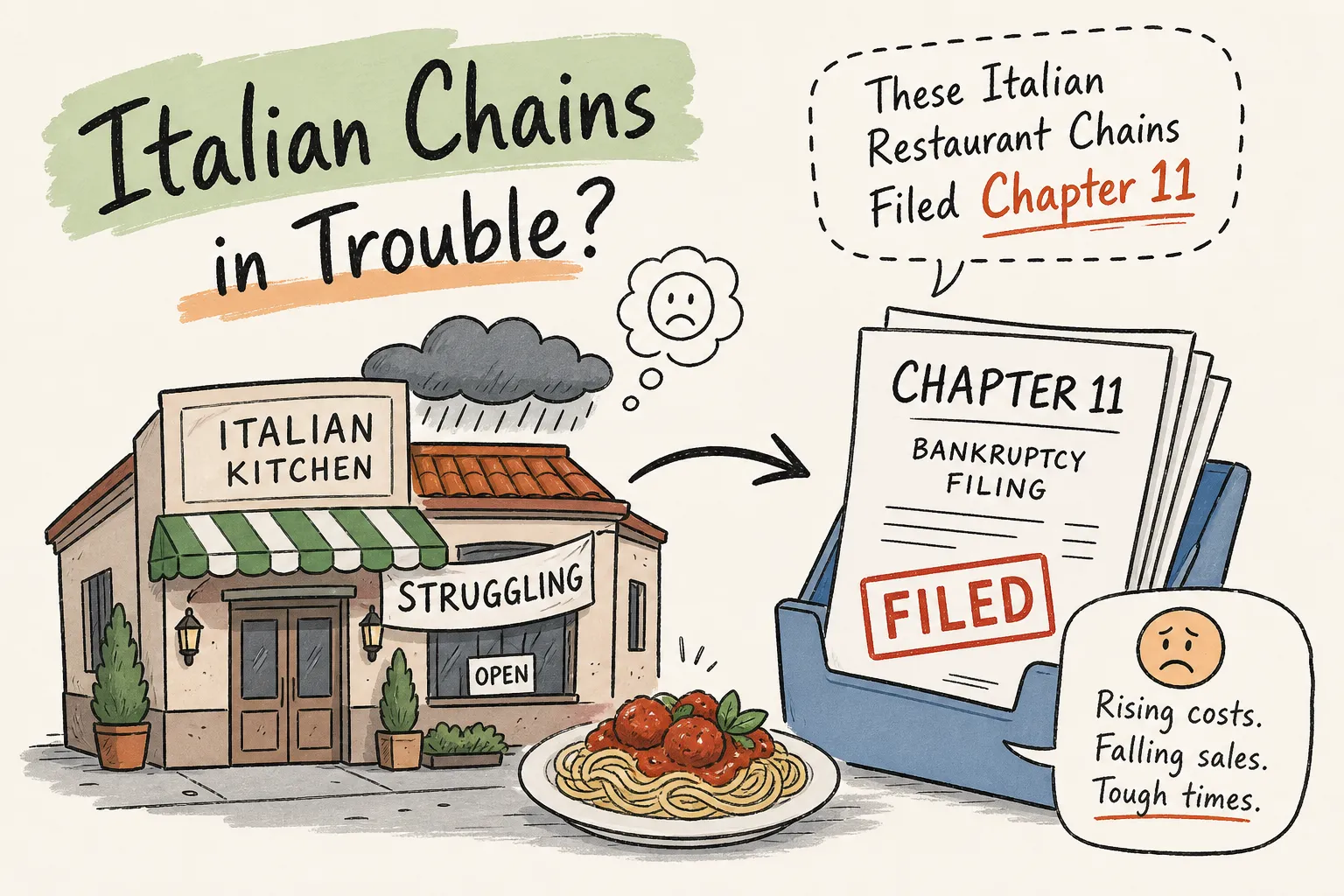
You make a reservation, drive across town, and find the parking lot empty. The windows are dark. A paper notice taped to the door is the only explanation. It’s a scenario that has reportedly played out at Bravo Italian Kitchen and Brio Italian Grille locations around the country, leaving diners confused about what actually happened and what comes next. When an Italian restaurant chain files Chapter 11, the fallout for customers can be sudden and disorienting, and casual Italian dining has gone through a rough cycle of bankruptcy filings, location closures, and ownership changes that shows no signs of slowing down.
The clearest example is Bravo Brio Restaurants, the parent company of both Bravo Italian Kitchen and Brio Italian Grille, which filed for Chapter 11 bankruptcy protection on August 18, 2024. Buca di Beppo filed its own Chapter 11 separately, closing 18 locations during restructuring before reportedly converting to a Chapter 7 liquidation in early 2025. Together, these two Italian restaurant chain Chapter 11 filings represent a significant contraction in casual Italian dining, and understanding what they mean helps you make smarter decisions the next time you plan a dinner out.
Here’s who filed, why it happened, and what you can do right now as a diner. Use those gift cards, verify your location is still open, and consider finding a solid Italian alternative nearby.
Which Italian Restaurant Chains Filed for Chapter 11
Bravo Brio Restaurants: The August 2024 Filing
Bravo Brio Restaurants, the corporate parent behind both Bravo Italian Kitchen and Brio Italian Grille, filed for Chapter 11 bankruptcy protection on August 18, 2024, a date confirmed by multiple news reports at the time of the petition, though readers should consult official court docket filings for primary verification. Because both brands operated under the same corporate umbrella, a single filing pulled both into the restructuring process simultaneously. At the time of the petition, the company operated roughly 48 locations total: approximately 25 Brio Italian Grille restaurants and 23 Bravo Italian Kitchen restaurants spread across the country, according to reporting on the bankruptcy filing. For contemporaneous reporting on the filing, see the Restaurant Dive article on the Bravo Brio filing.
The company’s spokesperson stated at the time of filing that there were no immediate plans to close any locations. Chapter 11 is designed to allow continued operations during restructuring, so the chain kept its doors open while working through the legal and financial process. That said, location status during any bankruptcy proceeding can shift quickly, and what’s accurate one week may not hold the next.
Buca di Beppo and the Broader Pattern
Buca di Beppo filed for Chapter 11 bankruptcy separately from Bravo Brio, and its outcome followed a harder path. The company closed 18 locations as part of its restructuring while attempting to keep 44 restaurants operating, according to reporting on the filing. When no viable reorganization plan emerged, the bankruptcy estate reportedly converted to a Chapter 7 liquidation in February 2025, effectively ending Buca di Beppo as a functioning chain in its prior form. Readers seeking authoritative confirmation should reference official court docket filings or credible news reports documenting the conversion date and closure count; see contemporaneous coverage such as the Shopping Center Business report on Buca di Beppo.
What connects these two Italian restaurant chain Chapter 11 cases isn’t just the shared cuisine. Both chains served the same demographic: families, groups celebrating occasions, and diners looking for shareable mid-price Italian meals in a sit-down environment. That specific customer base and service model turned out to be structurally exposed to the same financial pressures at roughly the same time.
Why Casual Italian Chains Are Especially Vulnerable
Full-service casual Italian restaurants carry overhead that most dining concepts don’t. Large dining rooms, extensive ingredient sourcing across pasta, proteins, sauces, and imported goods, and sizable front- and back-of-house staffs all add up before a single plate leaves the kitchen. Contrast that with a fast-casual concept running a 1,500-square-foot footprint with a limited menu and counter service, and the cost difference is stark. As a diner, that gap matters: any meaningful drop in revenue hits casual Italian operations harder and faster than it hits leaner concepts, which is why these chains end up in bankruptcy court while the build-your-own-bowl place next door keeps humming along.
The Financial Pressures That Pushed These Italian Restaurant Chains Into Bankruptcy Court
Debt, Rising Costs, and Shrinking Margins
Most Chapter 11 petitions in the restaurant industry trace back to the same combination: a heavy debt load built up through prior expansion or private equity activity, followed by rising operating costs that made those obligations unsustainable. Food costs increased sharply due to supply chain inflation, labor costs climbed as minimum wages rose across key markets, and higher interest rates made refinancing or servicing existing debt significantly more expensive. When a restaurant owes more each month than it can reasonably generate in profit, it eventually runs out of options.
Chapter 11 gives the company a legal framework to pause certain obligations, renegotiate with creditors, and restructure the debt load rather than simply shutting down overnight. For a plain-English primer on how Chapter 11 works and what it allows a business to do during restructuring, see the Debt.org guide to Chapter 11. For chains that filed, Bravo Brio and Buca di Beppo among them, this was the difference between an orderly process and an overnight collapse.
Lease Obligations and the Over-Expansion Problem
Casual dining chains expanded aggressively throughout the 2000s and 2010s, signing long-term leases on large, high-visibility locations. Those leases looked like assets during periods of growth. When sales volumes dropped, the same leases became fixed liabilities that drained cash month after month regardless of how the restaurant performed. One of the most powerful tools Chapter 11 provides is the legal ability to reject unfavorable leases. That’s precisely why struggling restaurant groups use reorganization bankruptcy rather than quietly closing locations one by one.
Post-Pandemic Dining Shifts and the Casual Dining Squeeze
American dining habits shifted structurally after 2020 and haven’t fully returned to prior patterns. Delivery and fast-casual adoption increased, weekday sit-down traffic softened, and diners became more price-sensitive across the board. Casual Italian chains that depended on consistent family dinner traffic took a double hit: their costs increased at the same time demand weakened. That combination is extremely difficult to outrun without restructuring the business from the ground up, which is exactly what these chains attempted through Chapter 11.
Chapter 11 vs. Chapter 7: What the Distinction Actually Means for a Restaurant
What Chapter 11 Reorganization Looks Like in Practice
Chapter 11 is a reorganization tool, not an immediate shutdown. The business continues operating while a court-supervised process works out a restructuring plan with creditors, allowing the company to reduce debt obligations, reject unfavorable contracts, and emerge leaner on the other side. For diners, this means locations typically stay open during the process. For employees, paychecks continue. The end goal is a company with fewer locations, less debt, and a realistic path to profitability.
When Restructuring Leads to a Sale
In many Chapter 11 cases, the company doesn’t truly reorganize. Instead, it uses the bankruptcy process to run a structured sale. The initial buyer, known as a stalking-horse bidder, who sets a floor price in the court-supervised auction, opens the competition to other potential buyers, and a court approves the winning bid. The buyer acquires the brand, selected locations, and operating assets while the old debt stays with the bankrupt entity and doesn’t follow the brand to the new owner. This is how a chain can survive under new ownership even when the original company couldn’t stay solvent.
How Chapter 7 Differs and When It Becomes the Outcome
Chapter 7 is liquidation. The business stops operating, assets are sold off to pay creditors in a court-established priority order, and the brand effectively ends. Some chains file Chapter 11 intending to reorganize or sell, then convert to Chapter 7 when no viable plan or buyer materializes. Buca di Beppo reportedly followed this path, with its estate converting to Chapter 7 in February 2025 after the Chapter 11 process concluded. This is the worst outcome for employees, franchisees, and anyone holding gift cards.
What to Expect as a Diner: Closures, Gift Cards, and Menu Changes
Which Locations Face the Highest Closure Risk
Restructuring teams typically evaluate each location’s sales performance, lease cost, and market position. Underperforming locations in smaller markets, suburban strip centers, or spots with expensive leases are the first to close. High-traffic flagships in major metro areas are usually kept because they generate the cash flow that funds the rest of the restructuring. If there’s only one Bravo Italian Kitchen or Brio Italian Grille location within driving distance of where you live and it’s in a smaller market, the closure risk is real and worth taking seriously before you make a reservation.
Gift Card Validity: The Honest Answer
Gift cards are classified as unsecured claims in bankruptcy, which means they rank near the bottom of the creditor repayment hierarchy. During an active Chapter 11, chains typically continue honoring gift cards because doing so maintains customer goodwill and supports the business value the chain is trying to preserve. If the chain converts to Chapter 7 liquidation, however, or if a new buyer purchases the brand without assuming gift card liability as part of the deal, those cards can become worthless with very little warning.
The practical advice is simple: use your gift cards now. Don’t hold them for a special occasion. If the chain is operating locations near you today, redeem the balance before the situation changes. A $50 gift card that becomes an unsecured claim in a liquidation proceeding is unlikely to recover more than cents on the dollar, if anything. For legal context on how gift cards are treated in bankruptcy cases, see this overview on gift cards and bankruptcy.
Menu and Pricing Changes After Restructuring
A restructured or newly acquired chain almost always trims its menu as one of the first cost-control moves. Expect fewer seasonal specials, simplified pasta and protein options, and occasional price increases as new ownership targets profitability. These changes aren’t always announced publicly in advance, so the menu you remember from your last visit may not match what’s currently being served. Checking a current menu before you go saves you the frustration of expecting a specific dish and arriving to find it’s been cut.
How to Check If Your Local Italian Restaurant Location Is Still Open
Why Location Status Changes Fast During Bankruptcy Proceedings
A restaurant location can go from operating to permanently closed in a matter of days during Chapter 11 proceedings, with minimal public notice. Corporate websites can lag in reflecting closures since the teams managing them are focused on the restructuring process itself. Social media accounts at the location level may go quiet without explanation. Calling the restaurant is worth trying, but staff in transition don’t always have reliable information about what’s happening operationally. Checking multiple sources, the chain’s site, online listings, and a restaurant discovery platform, gives you a more complete picture than any single source alone.
Using RestaurantMenuList.com to Verify Before You Go
RestaurantMenuList.com (Blog, Restaurant Menu List Review) is a restaurant discovery platform where you can search for current menus, operating hours, and location details in one place. Rather than relying solely on a chain’s corporate homepage, which may not reflect post-bankruptcy closures, searching a specific location on RestaurantMenuList.com can help you confirm whether it’s still active and pull the current menu. This is particularly useful for chains like Bravo Italian Kitchen and Brio Italian Grille right now, where location status varies city by city and can change without much advance notice. A quick search before you leave the house takes far less time than finding a dark parking lot on arrival.
Where to Find Excellent Italian Dining While the Chains Restructure
Independent Italian Restaurants Fill the Gap
The contraction of large casual Italian chains creates a genuine opportunity to discover independent trattorias and family-owned Italian restaurants that don’t make financial news headlines but consistently deliver quality food. Many smaller independent restaurants carry less exposure to the kind of large-scale private equity debt loads that have driven recent Italian restaurant chain Chapter 11 filings. A well-run family-owned Italian restaurant in your city may have been operating for decades with the same core menu and the same loyal customer base, a very different risk profile than a 50-location chain servicing leveraged buyout debt.
How to Discover Alternatives in Your City
RestaurantMenuList.com is a practical starting point for finding Italian alternatives. Browse Italian, Restaurant Menu List Review by city, compare menus and price ranges, and review hours before committing to a reservation. With current pricing and operating details listed alongside each restaurant profile, you get the pre-visit confidence you used to rely on chain familiarity to provide, applied now to local and independent spots that are genuinely worth discovering. Whether you’re searching for a casual family dinner or a more upscale Italian experience, that information is available before you commit to the drive.
What to Do Right Now
The restructuring of Bravo Brio Restaurants and the reported liquidation of Buca di Beppo mark a significant moment for casual Italian dining in the U.S., but they don’t signal the end of great Italian food in America. They signal the end of a particular business model that couldn’t adapt fast enough to shifting costs and dining habits. The food itself, and the appetite for it, remains as strong as ever. National coverage of this wave of filings is available in outlets such as Newsweek’s reporting.
Given the recent wave of Italian restaurant chain Chapter 11 filings, a few practical steps go a long way. If you have outstanding gift cards for either brand, use them at the earliest opportunity. If you visit a location regularly, verify its current status before making the trip, searching RestaurantMenuList.com gives you current hours and menu details without the guesswork. And if your usual spot has closed, treat it as a reason to explore independent Italian restaurants in your city that may have been there all along, waiting for a first visit. For full details on our policies, see the Disclaimer, Restaurant Menu List Review.
The best Italian meal you’ve ever had is probably not at a chain. This might be the nudge to go find it.

Hi! I’m Maherin Akter, and welcome to RestaurantMenuList.com. For the last three years, I’ve been on a mission to explore every flavor I can find sharing everything from my favorite recipes and honest restaurant reviews to deep dives into menu details.