
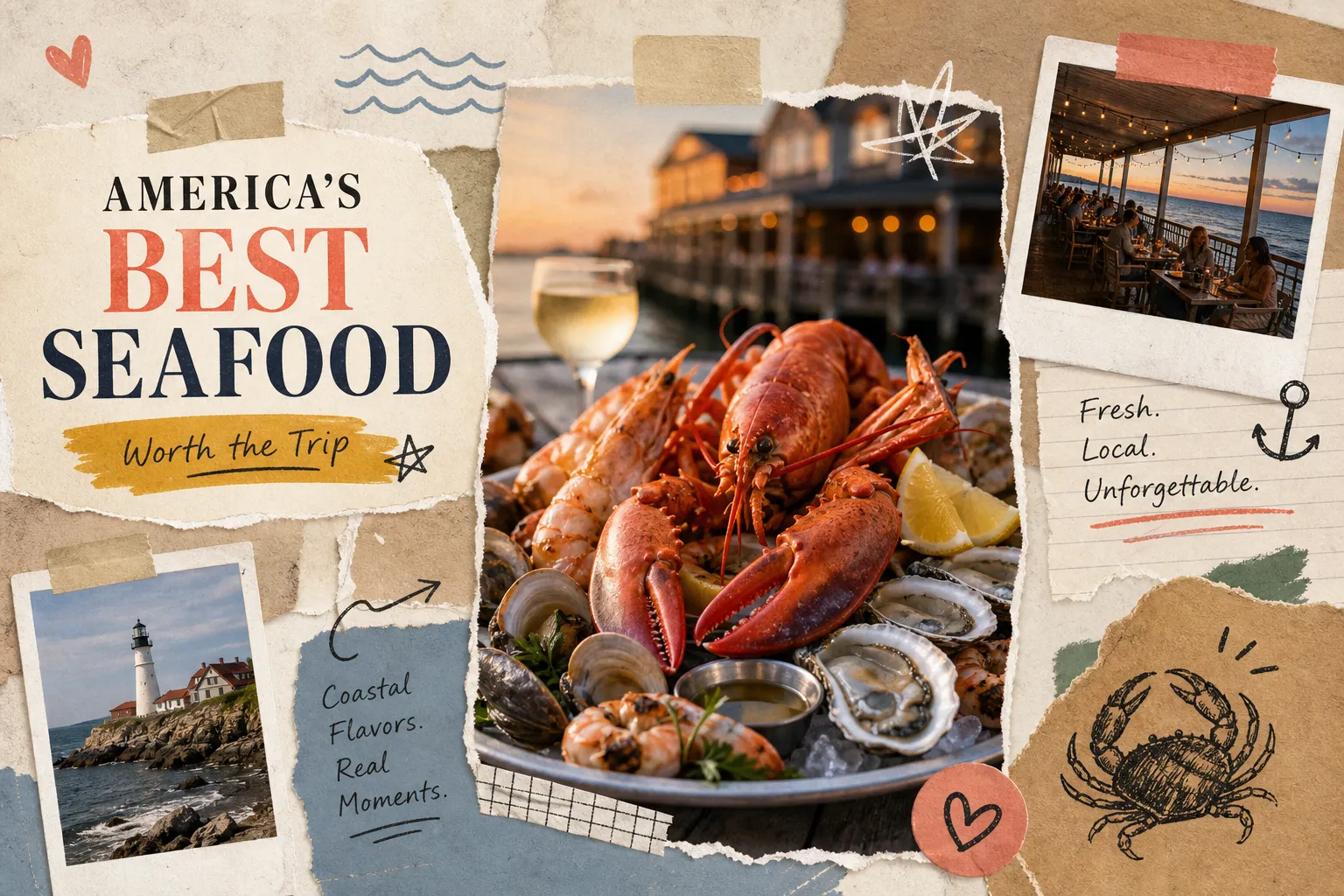
America’s coastlines, bayous, and harbors have produced some of the most celebrated seafood traditions in the world, yet most diners only scratch the surface of what’s available. From a paper-bib crab shack on the Gulf Coast to a three-Michelin-star room in Midtown Manhattan, the range of what counts as “a seafood dinner” spans more territory than most people realize. This guide covers the major regions, the dishes worth ordering, the quality signals that separate great spots from tourist traps, and the practical steps to plan a visit without surprises. Whether you’re heading to New Orleans for the weekend, mapping a Pacific Northwest road trip, or splurging on a special occasion dinner in New York, the best seafood dining in America rewards those who know where to look and what to ask. Before you book anything, RestaurantMenuList.com lets you browse menus and pricing details for top-rated seafood spots in any city you’re visiting, without juggling multiple tabs.
Best Seafood Dining Regions in America (And What Makes Each One Worth the Trip)
Best Seafood Dining: New England and the Mid-Atlantic Coast
The stretch from Maine to Maryland is the heartland of American seafood culture. Maine lobster, Massachusetts clam chowder, Maryland blue crab, and New York’s premier raw bar scene all trace their roots to centuries of fishing tradition still alive in the boats going out every morning. Boston has one of the highest concentrations of top-rated lobster roll spots in the country, with destinations like James Hook and Belle Isle Seafood drawing repeat visitors for their no-frills approach to fresh product. At the fine dining end, Le Bernardin in New York holds three Michelin stars and an editor score of 9.4 from The Infatuation, making it one of the most decorated seafood-focused restaurants in the country. Waterfront seafood restaurants throughout this region carry that same sourcing seriousness into every price bracket. If you’re searching for the best seafood dining near me on the East Coast, this corridor delivers more options per square mile than anywhere else in the country.
Gulf Coast, New Orleans, and Florida
Many diners consider the Gulf Coast the most flavor-forward stretch of best seafood dining in America, largely because of its deep Creole and Cajun seasoning traditions. New Orleans anchors a Creole seafood tradition built on roux, butter, and Gulf waters, gumbo, étouffée, charbroiled oysters, and Gulf shrimp po’boys each carry a spice profile and cooking technique that sets them apart from anything you’ll find on the Atlantic Coast. Florida adds stone crab claws with mustard sauce and a subtropical freshness that makes Miami a serious seafood destination. Many Gulf Coast seafood spots can be more budget-friendly than Northeast fine dining, which makes the region a strong choice for travelers who want quality without the Manhattan bill. Critics frequently cite New Orleans’ oyster bars among the country’s best, and the city’s raw bar culture alone makes it worth the trip.
Pacific Northwest and California
The Pacific Coast is America’s oyster and Dungeness crab capital. Seattle’s Pike Place Fish Market has established the city as a national benchmark for fresh product, and the oyster bars here, including Elliott’s Oyster House on Pier 56 and The Walrus and the Carpenter, consistently rank among the country’s best according to food critics and dining roundups. San Francisco brings Dungeness crab vendors along the Embarcadero and cioppino as a regional staple, while Los Angeles is home to Providence, a two-Michelin-star restaurant with a Michelin Green Star for sustainability and an exclusive commitment to wild-caught fish. The Japanese influence on West Coast seafood preparation, visible in omakase-style menus and precise fish handling, elevates the dining experience well beyond typical American presentations.
Signature Dishes to Order, Organized by Coast
East Coast Classics Worth Traveling For
Two lobster roll styles define New England and both are worth trying. The Connecticut style arrives warm, split-top, and dressed in drawn butter; the Maine style comes cold with a light mayo binder. Neither is wrong, but they’re genuinely different experiences, so it’s worth knowing which version a restaurant serves before you order. Beyond lobster rolls, New England clam chowder, oysters on the half shell with mignonette, and Maryland steamed blue crabs with Old Bay are non-negotiables on any East Coast seafood itinerary. These dishes are only as good as their sourcing, which connects directly to how you evaluate the restaurant before you sit down.
Southern and Gulf Seafood That Earns Its Reputation
Gulf shrimp po’boys, blackened redfish, stone crab claws with mustard sauce, and New Orleans-style charbroiled oysters represent the Gulf Coast’s most distinctive contributions to American seafood dining. The spice profile running through this region’s dishes is a direct product of Creole and Cajun cooking traditions, and it separates these preparations sharply from their East Coast counterparts. Oyster bars in New Orleans are a category unto themselves: the raw bar culture here rivals anything in New York, with the added dimension of hot preparations like charbroiled oysters that make the experience entirely its own. For a sense of the state’s signature seafood plates, Michelin’s write-up on iconic Louisiana dishes is a useful primer on what to look for when ordering locally.
West Coast Orders You Shouldn’t Miss
Dungeness crab, available from October through June, is the signature order on the West Coast and should be on your table if you’re visiting during season. Puget Sound oysters arrive at their peak in the colder months, when briny, mineral-rich flavors are most pronounced, a preparation style that West Coast chefs treat with the same reverence New Englanders reserve for lobster. Pacific halibut and San Francisco cioppino round out the regional essentials. West Coast menus rotate heavily with the seasons, which is itself a quality signal: a restaurant that changes its offerings based on what’s actually available is prioritizing fresh sourcing rather than using it as a marketing claim.
How to Tell a Quality Seafood Restaurant from a Tourist Trap
Menu Signals That Point to Real Freshness
A rotating menu with “market price” notation on fish, daily catch specials, and sourcing callouts that name specific fisheries or local harbors all point to a kitchen with a real relationship with its suppliers. Restaurants that list the same fish dishes year-round at fixed prices are more likely relying on frozen stock, acceptable at the casual end, but a disqualifier when you’re spending $80 or more per person. A daily specials board is one of the clearest signals that a kitchen is working with what came in that morning rather than what’s been sitting in cold storage. Look also for explicit language like “fresh never frozen” or “day boat delivery,” which restaurants use specifically because freshness is a genuine selling point, not just a marketing placeholder. For a quick checklist on spotting genuinely fresh seafood before you sit down, see this guide on how to tell if your seafood is fresh.
What Your Server’s Answers Reveal
A knowledgeable server at a genuine fresh seafood restaurant can tell you where the fish was caught and when it arrived at the kitchen. If the answer is vague or gets redirected to the menu without specifics, that tells you something about the kitchen’s sourcing depth. The most useful questions to ask are: “Is this fresh or previously frozen?” and “When did this come in?” A server who can answer both without hesitation is working in a restaurant that treats sourcing as a core value. Secondary signals include seasonal availability explanations, fluency with dietary substitutions for specific allergens, and accurate descriptions of portion sizes before you commit to a high-ticket order.
Seafood Dining Styles: Casual Oyster Bars to Michelin-Starred Rooms
Casual Waterfront Spots and Neighborhood Oyster Bars
Waterfront seafood restaurants and neighborhood oyster bars represent the accessible, genuinely joyful end of the spectrum. These are the paper-bib, cold-beer, communal-table experiences where the atmosphere is as much of the draw as the food itself. The Gulf Coast crab shacks, Manhattan raw bars, and Seattle waterfront spots all fall into this category. Expect to spend roughly $25 to $60 per person for a full meal, estimates based on typical menu pricing at casual coastal spots, making this the easiest entry point for diners who want quality seafood without a weeks-out reservation or a dress code conversation.
Fine Dining and Michelin-Starred Seafood Experiences
For special occasions, the American fine dining seafood scene delivers genuinely world-class experiences. Le Bernardin in New York (three Michelin stars) and Providence in Los Angeles (two Michelin stars, Michelin Green Star for sustainability) represent the current pinnacle of best seafood dining at the highest level. Chef’s Table at Brooklyn Fare has also been recognized for its seafood-forward omakase; verify current Michelin star status before booking, see the list of Michelin 3-star restaurants in the United States for a snapshot of the most-decorated rooms. At this tier, expect tasting menus in the $150 to $350 per person range before wine, prix fixe formats, and reservation windows that stretch two to three months out at peak periods. Signature dishes at these restaurants include preparations like oysters with golden Kaluga caviar, scallops with black truffle, and uni egg, reflecting the premium sourcing and technique that justify the price. For curated local recommendations and maps of top seafood rooms in New York City, resources like The Infatuation’s guide to the best seafood restaurants in NYC can help you decide between a raw bar and a tasting-menu experience.
Planning Your Seafood Dinner the Smart Way
Why Checking the Menu Before You Book Saves the Meal
One of the most common dining disappointments is arriving at a hyped restaurant and finding the menu doesn’t match your expectations, the prices are higher than you budgeted, or a dietary restriction you have wasn’t mentioned anywhere online. Reviewing a full menu and verified price list before you commit solves all three problems. This is especially true for seafood restaurants, where seasonal availability and market pricing can shift the experience from one visit to the next. The diners who leave satisfied are almost always the ones who did five minutes of research before making a reservation.
Using RestaurantMenuList.com to Research Seafood Restaurants Before You Go
RestaurantMenuList.com is designed to help you browse full menus, price ranges, hours, and restaurant details for top-rated seafood spots in any city you’re planning to visit, all consolidated in a single view. Instead of bouncing between review platforms, Google searches, and the restaurant’s own website (which may not have current pricing), you get the information actually useful for making a decision. It’s particularly helpful when you’re traveling somewhere unfamiliar and want to compare two or three seafood dinner spots side by side before you pick up the phone to reserve. The platform covers everything from fast-casual coastal spots to Michelin-recognized fine dining rooms, so price range comparisons alone can help you calibrate expectations before you arrive. For broader regional listings and state-by-state coverage, see our USA, Restaurant Menu List Review, and if you want quick ideas for casual options, our roundup The Top 10 Fast Food Spots You Must Try, Restaurant Menu List Review highlights popular fast-casual alternatives. For ongoing tips and longer reads about dining strategy, visit the Blog, Restaurant Menu List Review.
Reservation Timing and What to Ask Before You Confirm
Peak seafood season on the East Coast runs through summer, while Dungeness crab season on the West Coast peaks in winter, and both periods fill the best restaurants weeks ahead. For fine dining spots, book four to eight weeks out as a baseline; for top Michelin-starred rooms, plan for two to three months. Mid-week evenings at popular casual spots often have better availability than weekends. Before confirming, ask specifically whether the kitchen accommodates shellfish allergies rather than a general “seafood allergy” inquiry, since the distinction matters for cross-contamination purposes. If you’re bringing wine, confirm the corkage fee upfront, especially at fine dining rooms where that number can catch you off guard at the end of the night.
Find Your Next Seafood Spot with Confidence
The best seafood dining in America spans a remarkable range: paper-napkin crab shacks on the Gulf, raw bars in Lower Manhattan, omakase seafood rooms in Brooklyn, and chowder spots on the Maine coast. What connects all of it, regardless of price point or region, is the same: fresh sourcing, a kitchen that respects the ingredient, and staff who know their product well enough to answer a direct question about it. Knowing what to order, which region to visit for which dish, and how to research a restaurant before you arrive is what separates a memorable meal from a forgettable tourist experience. For curated city-level lists and maps of standout seafood restaurants in New York, see Eater’s map of the best NYC seafood restaurants to narrow your options quickly.
Before your next trip, visit RestaurantMenuList.com to browse full menus, verified prices, and location details for the best fresh seafood restaurants in any city on your itinerary. Review the menu before you book, confirm the pricing, and walk in knowing exactly what to expect.

Hi! I’m Maherin Akter, and welcome to RestaurantMenuList.com. For the last three years, I’ve been on a mission to explore every flavor I can find sharing everything from my favorite recipes and honest restaurant reviews to deep dives into menu details.